
GSPS contributed several items to the information booklet that accompanies the BFI Goons on Television DVD/Bluray project. Some relevant items from the website tvstudiohistory.co.uk were not included simply due to the lack of room for any graphics. Where better to share such extra goodies than here?

photo thanks to Fred Bonfield and transdiffusion.org
Marjorie Sullivan’s unique photos give us some clues about the Associated-Rediffusion studio building at Wembley in 1956. Here is one photo that was taken just a few years later, around the time that The Best of Fred compilation programme was transmitted.
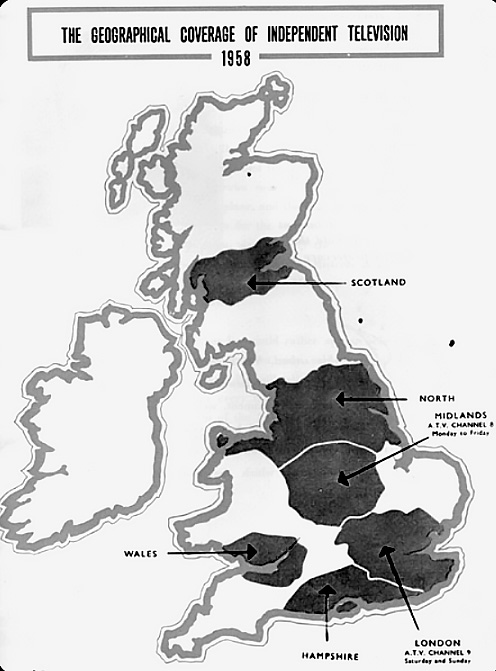
This “official” map, published in 1958, helps to visualise the likely patches of UK that could have seen Son of Fred towards the end of 1956. People living in the area served by the London/ Kent area transmitter bit were the only ones that got to see either The Idiot Weekly Price 2d or A Show Called Fred earlier in 1956.
The website tvstudiohistory.co.uk holds a wealth of further information about the development of the A-R TV studios beyond the Freds.
It explains in detail the financial challenges that faced A-R TV in 1956, (to which John P Hamilton alludes in his 1997 talk), which were looming behind the decision to cancel Son of Fred prematurely.
Although Spike seems to spend a lot of time in A Show Called Fred and Son of Fred breaking television conventions by showing the technicians, TV cameras and some previously-used sets, it is hard to figure out what their studio looked like, or how large it actually was. This more recent shot of the slightly bigger Studio 1 gives a clue – its layout and configurations were similar to Studio 2, where many “Freds” were transmitted live.

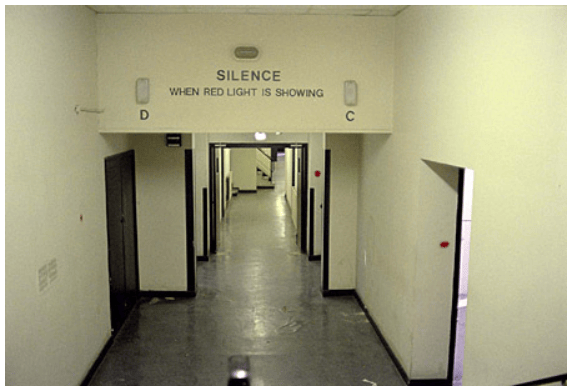
This is the building’s central corridor more recently, which I suspect is where Spike was broadcast live for the beginning of Show Called Fred ep.1! ‘D’ refers to the historic Rediffusion studio 2 and ‘C’ to studio 1. Try matching this up with the restored Fred programme for yourselves.
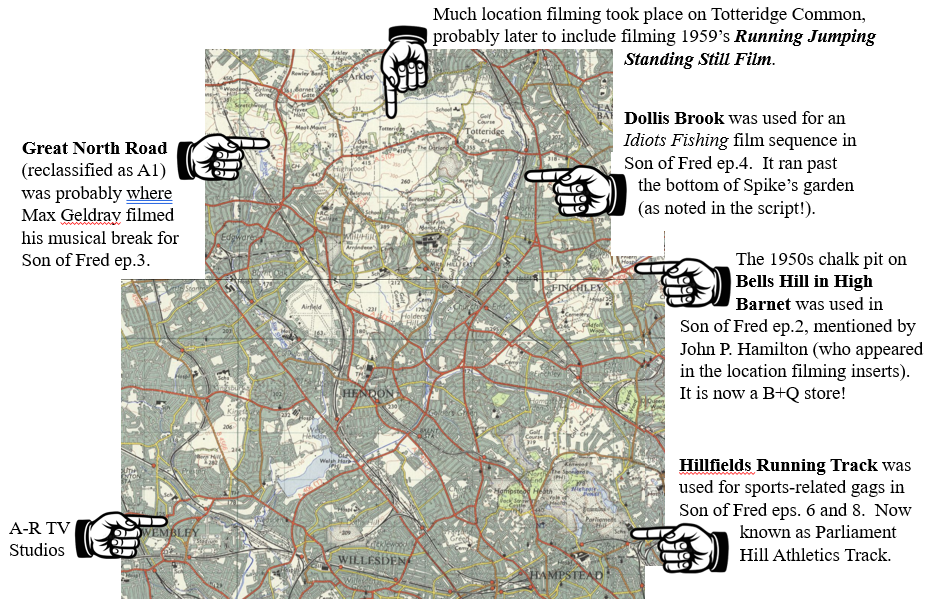
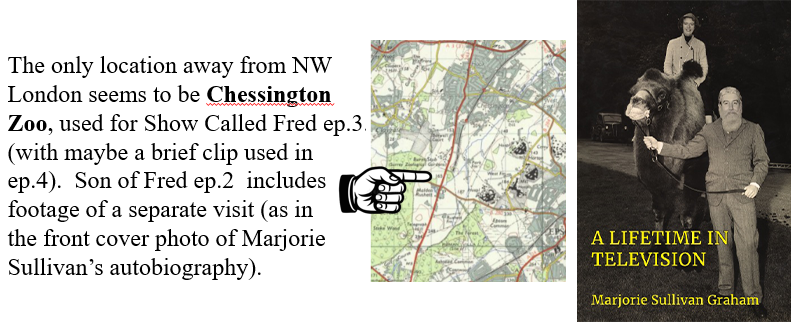
When watching the Freds one can’t help noticing and wondering about the inserted film footage. One feature on the DVD/Bluray goes through a collection – incomplete – of Marjorie’s personal behind-the-scenes photographs. It has been possible to identify a lot of the key locations where filming actually took place.
When talking about the photos at the Brighton Goonvention in 1997, Marjorie identifies one popular filming countryside location as Totteridge Lane. In London (and 1950s) terms this was not too far from the studios and is used several times. It also looks strikingly similar to all of the background settings for the Running Jumping Standing Still Film – why not go back to an area that Spike and Peter knew had worked very well for a previous comedy project? It offered a rural background where the production team could find slightly different variations on the country theme for each different mini-sketch they wished to film.
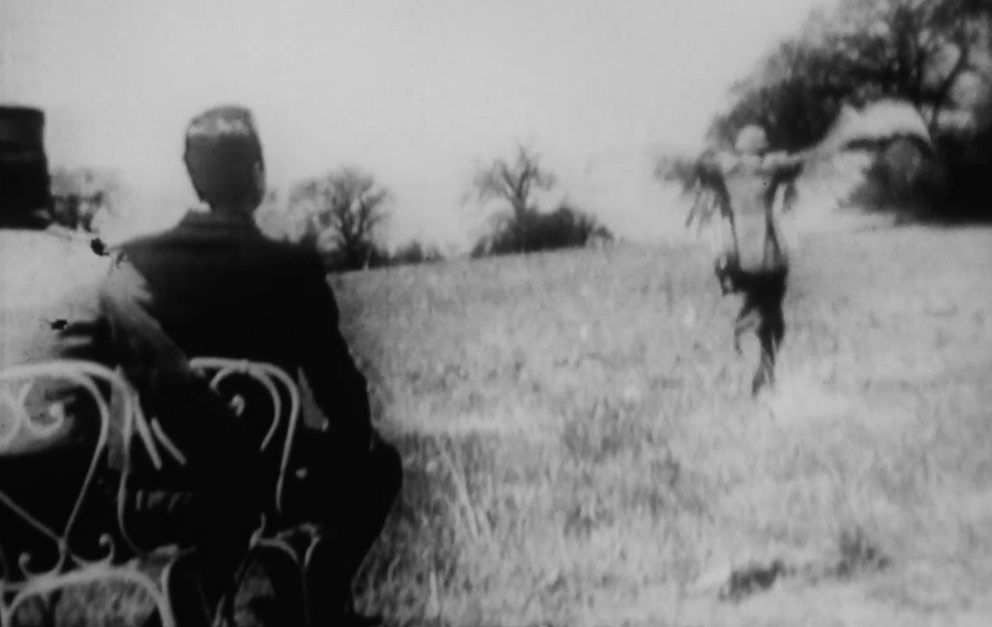
Show Called Fred ep.1 …
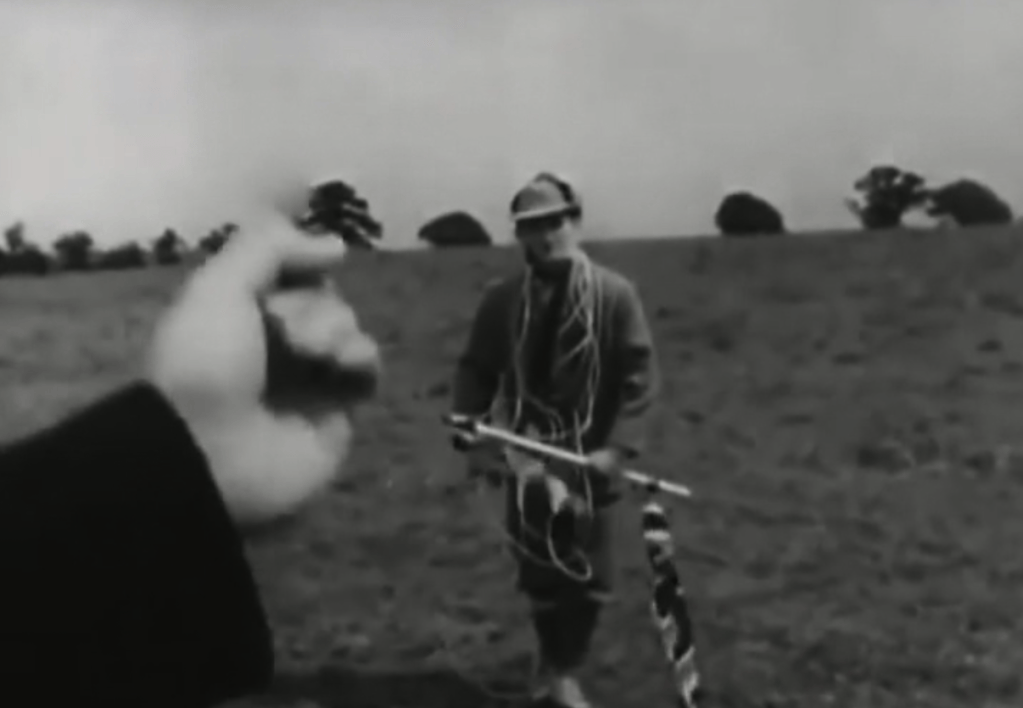
Running Jumping Standing Still…
To quote Wikipedia: “[Totteridge] sat on a high ridge (italics mine) defined by the natural boundaries of the Dollis Brook to the north and Folly Brook to the south, keeping it physically separated from the surrounding urban pressure….” Remember Sellers looking through his telescope to play the violin on a high ridge…?
“In the 1950s, Totteridge Lane and the wider Totteridge area in Barnet … [functioned] as a rural, open-country oasis…the Totteridge Manor Association… acquired the manorial rights to the common lands, ensuring that Totteridge Green, Totteridge Common, the historic ponds, and the wide grass verges lining Totteridge Lane were permanently protected from development.” [W]
Fred and Son of Fred – main filming locations
They were even able to do water gags in the Totteridge area. Now known as Long Pond – perhaps the name has changed since the 1950s – it is part of a well established wildlife reserve and has had plenty of time for growth around the edges to flourish.
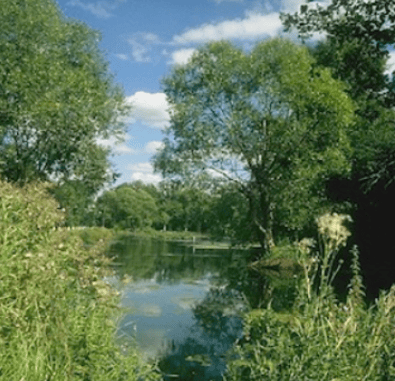
Long Pond, Totteridge Common
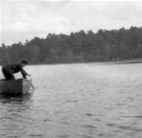
Son of Fred, ep.4
Acknowledgements
Something like this inevitably leans on the work of others. We have cited website sources in the article and permissions to use them with thanks (for saving us a lot of work!!).

